ASMR Videos on TikTok and Reels: Why Sound-First Content Holds
ASMR TikTok ideas that hold viewers: why audio is the hook, how close framing and loops earn rewatches, and how to fold ASMR into product and food content.

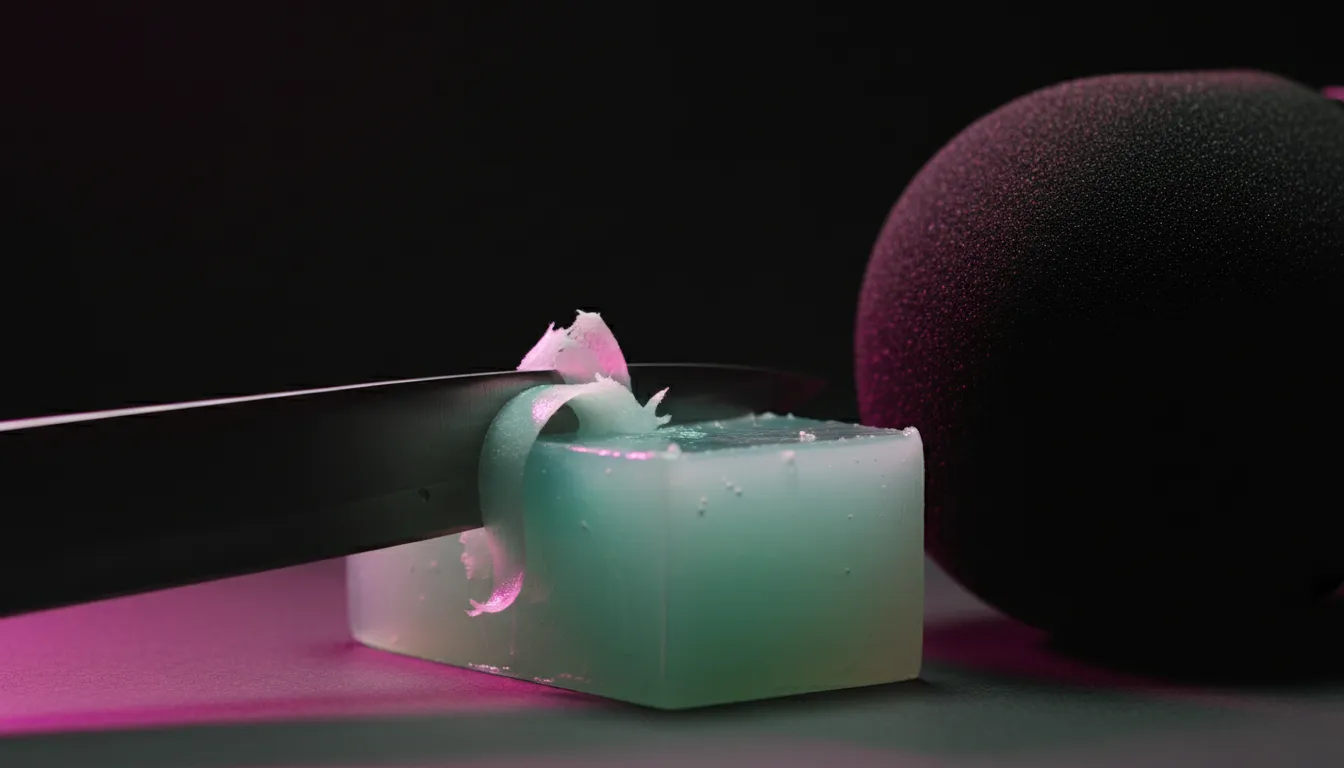
Most short videos are built for the eyes and tolerate sound. ASMR videos flip that order, and that is exactly why a clip of someone slicing a bar of soap can hold a viewer longer than a polished talking head. The sound is the hook, the picture is the proof, and the viewer stays because their ears have a reason to.
So here is the direct answer for anyone searching asmr tiktok ideas: the format works when the very first sound is crisp, close, and unmistakable, when the camera is close enough that the viewer feels in the room, and when the video ends in a way that invites another listen. Ideas are easy. Execution is almost entirely an audio and framing problem.
Below we cover why sound-first content holds, the three craft decisions that decide whether an ASMR clip works, a list of ideas that suit the format, and how to fold ASMR moments into product and food videos that are not “ASMR channels” at all.
Why sound-first content holds attention
A scroll is a visual decision. Thumbs move past anything that looks like something already seen. ASMR gets a second chance most formats never get: a viewer who would have swiped on the image alone often pauses on a sound that is sharper or stranger than the ambient noise of their feed.
Three things make that pause turn into a full watch:
- The payoff is continuous. A tutorial pays off at the end. A satisfying sound pays off every second, so there is no slow middle for the viewer to escape through.
- There is nothing to understand. No language barrier, no setup to follow, no argument to agree with. That makes ASMR one of the few formats that travels across niches and countries without translation.
- It rewards repetition. People rewatch sounds they liked the way they replay a song. That rewatch behavior is the same mechanic we break down in The Loop: When Ending Where You Started Buys Watch Time.
The catch: ASMR only holds when sound is actually on. A large share of viewers scroll muted, so the visual has to stand on its own for long enough that they choose to turn sound on. More on that below.
The three decisions that make or break an ASMR clip
When our team looks at sound-led videos across the library, the ones that hold are not the ones with the most expensive microphones. They are the ones that got three decisions right.
1. The first sound arrives immediately
The single most common failure is a quiet opening. The creator sets the object down, adjusts their hands, and the first satisfying sound lands at second three. By then most viewers are gone.
Treat the first sound the way you would treat a cold open: no setup, no intro, no reaching for the knife. Start the clip on the cut, the tap, the pour, or the crunch. If your best sound happens once, consider opening on it and then showing how you got there.
- Trim the dead air before the first contact sound, even if it is only half a second.
- Pick your loudest clean moment for frame one. A crisp crunch beats a soft brush.
- Avoid background music in the opening. A track masks exactly the texture the viewer stopped for. If you use music at all, it belongs well underneath, which we covered in How Loud Should Music Be Under a Voiceover.
2. Close framing, so the eyes believe the ears
ASMR is intimate by definition. A wide shot of a kitchen with a faint crunch in the middle reads as a cooking video with bad audio. A tight shot of the knife edge entering the crust reads as ASMR.
- Fill the frame with the source of the sound. Hands, tool, material. The viewer should see the contact that makes each sound.
- Keep the camera still. Handheld wobble pulls attention to the camera. A locked shot lets the viewer settle in.
- Light for texture. Side light shows grain, foam, bubbles and crumbs. Flat front light makes everything look like plastic.
Close framing also solves the muted-viewer problem. A tight, tactile image (a blade in kinetic sand, a spoon cracking caramel) looks satisfying even with sound off, which is what earns the tap to unmute.
3. An ending that invites another listen
ASMR rarely has a punchline, so the ending has two jobs: avoid feeling abrupt, and make a replay feel natural.
- Loop it. End on a frame that matches the opening, so the replay is seamless.
- Save the best sound for last. If the strongest moment is in the middle, the end feels like a fade. If it is last, viewers rewind to hear it again.
- Keep it short. Many ASMR clips work best well under thirty seconds. Length is not the goal. Density of satisfying moments is. Our ideal video length guide explains why the right length depends on how much payoff you can sustain.
ASMR TikTok ideas that suit the format
The best ideas share one trait: the sound is distinctive within the first second, and the visual is satisfying even muted. A starting list:
- Cutting and slicing: soap, kinetic sand, crusty bread, frozen fruit, honeycomb.
- Pouring and fizzing: carbonated drinks over ice, thick sauces, resin, coffee into milk.
- Crunch and crack: caramelized sugar, tempura, glass candy, ice.
- Packing and unpacking: tissue paper, tape, boxes with snug lids. This overlaps with unboxing videos, where the reveal does the visual work and the sound does the holding.
- Restoration and cleaning: scrubbing, pressure washing, polishing. The before and after gives the clip a story while the sound carries the middle.
- Organizing and restocking: jars, pens, fridge drawers. Repetitive clicks and taps make the routine watchable.
- Crafting: clay, wood carving, calligraphy nibs on paper, knitting needles.
- Whispered or soft-spoken explainers: a quiet voice walking through a routine. This works when the voice is close and clean, and fails when it sounds like a muffled phone call.
Pick one sound family per video. Mixing tapping, crunching and whispering in thirty seconds dilutes the texture that made the viewer stop.
Mixing ASMR into product and food content
You do not need an ASMR channel to use the format. Some of the most effective uses are a few seconds of sound-led footage dropped into a video that is about something else.
Product videos
A product clip that opens on a satisfying sound (a magnetic lid closing, a pump click, a zipper, a sealed jar opening) earns attention before any claim is made. The sound becomes a sensory proof of quality that a voiceover cannot deliver.
- Open on the sound, then cut to the pitch.
- Let one sound repeat as a motif between sections.
- Keep the product close and the background clean, the same rules as above.
Food videos
Food is where ASMR is most natural. The first bite, the crunch of a crust, the sizzle hitting a pan. In Recipe Videos People Watch to the End we argue that the finished dish belongs first; pairing that first frame with the sound of the first cut or bite makes the opening twice as strong.
- Record clean sizzle and crunch tracks separately from your voice, so you can bring them forward at key moments.
- Mute music at the payoff. Drop the track for the bite or the pour, then bring it back.
- Do not over-process. Heavy noise reduction can strip the very texture you want. A quiet room helps more than a filter.
Common ASMR mistakes
- Talking over the sound. If you narrate, step back from the microphone at the satisfying moments, or cut your voice entirely there.
- Trending music on top. A trending track can help discovery for some formats, as we covered in Original Audio vs Trending Sound, but in ASMR it often buries the reason the viewer stopped.
- Wide, busy frames. Clutter in the background competes with the texture.
- Clipping and distortion. Loud is not the goal. A distorted crunch is the fastest way to lose a viewer who came for the clean version.
- Too many angles. Each cut resets the listening experience. Fewer, longer, closer shots tend to hold better.
How to check whether your ASMR clip works before posting
Most creators judge ASMR by feel: it sounded satisfying in their headphones, so they post it. The question that matters is whether the first seconds give a stranger a reason to stay, with and without sound.
When you run a clip through Blossom’s content analysis, the breakdown scores the hook on a 1 to 10 scale, explains why, and maps where the energy builds and dips with timestamps. For an ASMR clip that shows you quickly whether your first satisfying sound lands at the start or arrives late, and whether the middle sags before the ending. You can also browse analyzed sound-led videos in our library to see how other clips in your niche open, without copying anyone’s footage.
A few quick self-checks you can run today:
- Watch the first two seconds muted. Is the image satisfying on its own?
- Listen with your eyes closed. Is the first contact sound in the first second?
- Watch it twice in a row. Does the second play feel natural, or does the end jolt?
If any answer is no, the fix is almost always a trim, a tighter frame, or moving the best sound.
The takeaway
ASMR is not a niche trick. It is the clearest example of a principle that applies to every short video: the viewer stays for a continuous payoff. In ASMR the payoff is sound, so the craft is getting that sound into the first second, framing it close enough to believe, and ending in a way that makes the replay feel inevitable.
Start with one sound family, open on your cleanest moment, and keep the camera close. Then check the clip before you post instead of after. For more answers on hooks, retention and formats, see our FAQ, or start your Blossom trial to see how your next sound-led video opens.
Read next
Best viral.app Alternatives in 2026 (Free & Paid)
Five real viral.app alternatives, free and paid, compared on one question: does the tool score your hook and tell you why it works? Checked 26 Oct 2026.
Why Specific Hooks Beat Vague Ones (and How to Sharpen Yours)
Specific hook examples for TikTok: why a number, place or stake in the first line holds viewers a vague promise loses, and how to rewrite a soft hook three ways.
Blossom vs Iconosquare: Post Types vs a Name for the Video's Shape
Iconosquare vs Blossom: Iconosquare compares Reels, carousels and posts. Blossom names the structure inside each video, so a winning shape becomes repeatable.