Recipe Videos People Watch to the End (and Save)
Recipe video TikTok tips that hold viewers: show the finished dish first, give one step that surprises, pace the prep to the hands, and end on something worth saving.

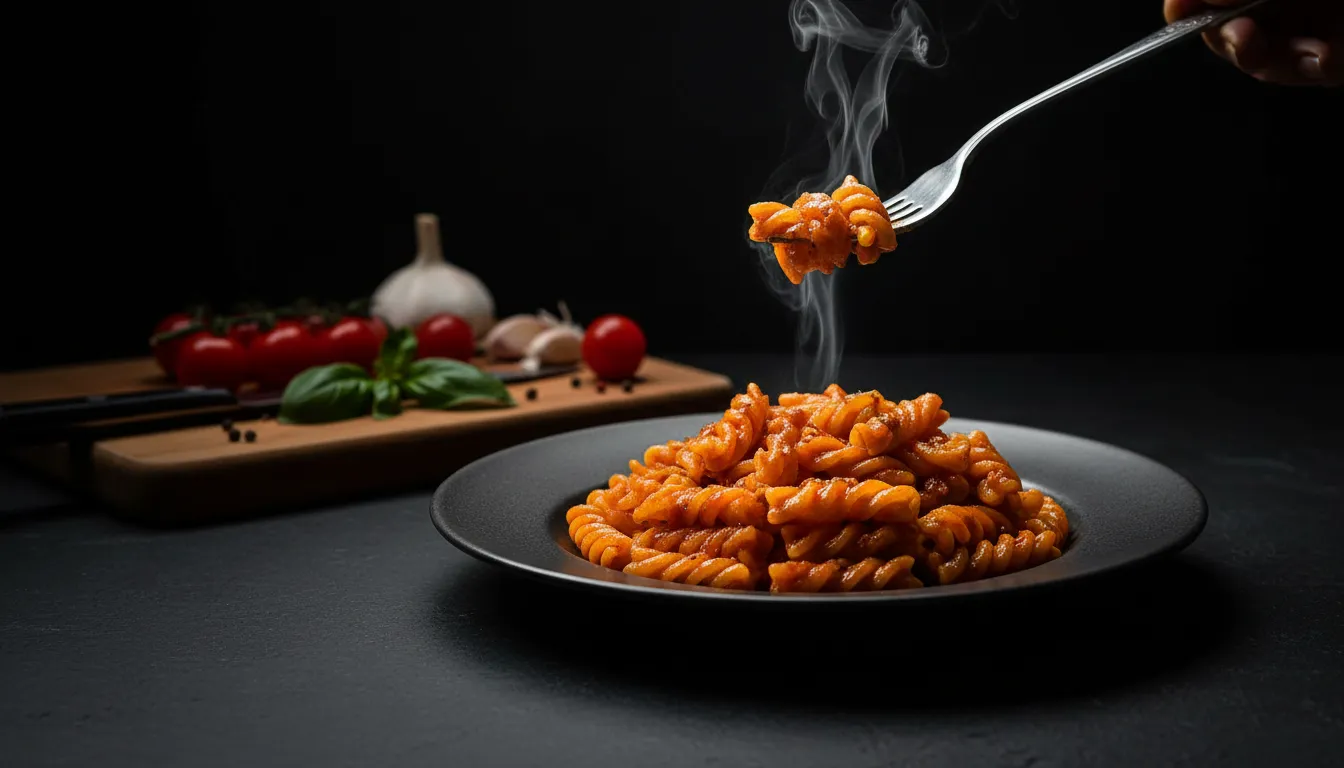
Most recipe videos are not too long. They are in the wrong order. The viewer is asked to watch onions soften for eight seconds before they know whether the dish at the end is something they would ever cook.
Here is the short answer to what you searched. Recipe videos hold when the finished dish appears first, one step in the middle genuinely surprises, the prep is paced to the hands instead of the clock, and the ending gives the viewer a reason to save it. The recipe itself matters less than you think. The order you show it in is most of the work.
If you read our post on how to get more saves with your closing line, this is the format where that advice pays the most. Recipes are one of the few kinds of short video people save on purpose, because they plan to use them.
Why recipe videos are a special case
A recipe video makes two promises at once. The first is entertainment: watching food come together is satisfying in itself. The second is utility: “you could make this tonight.” Most short formats only make one of these promises. Recipes make both, which is why they can earn saves and shares in the same video.
The catch is that the two promises pull in different directions. Utility wants every step shown clearly. Entertainment wants the boring steps gone. The videos that hold find a way to make the full method available without making the viewer sit through all of it.
When we look at recipe videos in our library of analyzed videos, the ones that sag tend to share one shape: a slow, literal walk through the ingredients, with the payoff dish showing up only in the last seconds. The ones that hold usually show the payoff early and then explain how to get there.
Show the finished dish first
The single biggest change most recipe creators can make is moving the final plate to the opening second.
That sounds like it spoils the ending. It does the opposite. In a recipe video, the dish is not a surprise to protect. It is the reason to watch. A viewer scrolling past needs to decide in about a second whether this is food they want, and they can only decide that by seeing it.
Ways to open strong:
- The money shot, close and moving. A fork pulling through cheese, a knife cutting a crust, a spoon breaking a yolk. Motion beats a static plate.
- The finished dish plus one line of stake. “Fifteen minutes, one pan” or “the pasta I make every Sunday” tells the viewer what kind of recipe this is.
- The result next to the effort. If the dish looks hard and is not, say so. “This looks like a restaurant plate. It is four ingredients.”
What does not work: a cutting board with raw ingredients laid out neatly. It looks tidy, and it tells the viewer nothing about whether the result is worth their time. We made the general case for skipping the warm up in cold opens with no intro.
The cover is a second chance
On your profile grid and in search, the cover frame does the same job as the first second. A recipe cover should be the finished dish at its best angle, not a half-chopped onion. There is more on this in the cover frame as a second hook.
The one step that surprises
Once the viewer knows what they are making, the middle of the video needs a reason to keep watching. In recipes, that reason is almost always one step the viewer did not expect.
It might be:
- An unusual ingredient. A spoonful of miso in the caramel, coffee in the chili, grated frozen butter in the biscuits.
- A technique they have not seen. Smashing the potatoes before roasting, cooking the pasta in the sauce, salting the eggplant and squeezing it.
- A mistake most people make. “Most people add the garlic here. That is why theirs tastes burnt.”
Name the surprise early so the viewer knows it is coming. A line like “the trick is in step three” works the same way a mid-video re-hook does, which we cover in the mid-roll re-hook. It gives the viewer a specific reason to stay past the slow part.
One surprise is enough. A recipe with five “secret” tricks reads as a list of claims, and none of them lands. A recipe with one real one gets remembered and repeated.
Pace the prep to the hands, not the clock
Recipes have built-in dead time: chopping, stirring, waiting for water to boil, waiting for the oven. Showing it in real time loses viewers. Cutting it all out makes the method impossible to follow. The middle ground is pacing.
A practical way to think about each step: does the viewer need to see this to cook it, or just to know it happened?
- Show the steps that change the food. The sear, the fold, the moment the sauce thickens. These are the shots viewers will rewatch when they cook.
- Compress the steps that are only labor. Chopping five vegetables can be a handful of fast cuts. Nobody needs to see the full dice.
- Skip the waiting entirely. “Twenty minutes later” on screen, or a straight cut from raw to done. The oven timer is not content.
The hands are the presenter in most recipe videos, the same way they are in unboxings. Clean, confident hand movements make a recipe look doable. Hesitant ones make it look hard, even when it is not.
Sound does more than you think
The sizzle when food hits the pan, the crack of a crust, the scrape of a spatula: these are a big part of why food videos feel satisfying. Record them close, and keep music low enough that they come through. If you talk over the sizzle, you lose the sizzle.
Whether you narrate in voiceover or talk to camera changes the pacing too. We compared the two in voiceover vs talking to camera. For recipes, voiceover usually wins because it lets the frame stay on the food.
Make it followable without making it slow
A recipe video that holds attention but cannot be followed fails the utility promise, and that costs you the save. A few ways to keep it usable:
- Put quantities on screen, briefly. “2 tbsp miso” as a short text overlay is faster than saying it, and viewers who save the video will pause on it later.
- Keep the order honest. If you shot steps out of sequence, put them back in sequence in the edit. A viewer cooking along cannot follow a jumbled method.
- Put the full recipe in the caption. Ingredients and short steps in the caption let the video stay fast while the method stays complete. Captions also help viewers who watch with the sound off, which we looked at in do captions increase views.
The goal is that someone who saves your video can cook from it a week later without hunting for a blog post.
End on something worth saving
The ending is where a recipe video either earns the save or does not. “Save this for later” on its own is a request with no reason attached. The ending needs to give the viewer the reason.
Endings that tend to earn it:
- The bite. A real first taste, with an honest one-line reaction. It closes the loop the opening shot opened.
- One variation. “Swap the chicken for chickpeas and it works just as well.” It tells the viewer the recipe has more uses, which is a reason to keep it.
- The time and effort, said plainly. “Twenty minutes, one pan, weeknight dinner sorted.” That is the line people screenshot.
- A loop back to the opening shot. Ending on the same money shot you opened with can make the video replay cleanly. We cover when that helps in seamless loop endings.
Resist the long outro. Once the dish is plated and tasted, every extra second is a chance to leave before the video counts as watched to the end.
Saves and shares want different endings
A recipe built for saves ends on utility: the time, the variation, the full method in the caption. A recipe built for shares ends on emotion or surprise: “my kids asked for this three nights in a row.” Both are useful, and they are not the same. We break down the difference in saves vs shares.
A recipe structure to start from
If you want a template to test against, this fits most short recipe videos:
- Second 0 to 1: the finished dish, close and moving, plus one line of stake.
- Next few seconds: name the surprise step that is coming.
- The method: steps that change the food shown clearly, labor compressed, waiting skipped, quantities on screen.
- The surprise step: given a beat of its own, with the reason it works.
- The end: the bite or the variation, then stop. Full recipe in the caption.
Then change one thing at a time. Move the dish earlier, cut a step you thought was necessary, drop the music under the sizzle. Recipe videos are a good format for small tests because the structure is so repeatable from one dish to the next.
How Blossom helps with recipe videos
When you paste a recipe video into Blossom, the analysis scores your hook from 1 to 10 and explains why, and maps where attention builds and where it drops, with timestamps. For recipes that map is the useful part: if the drop lands on your chopping montage, you know which step to compress, and if attention climbs at the surprise step, you know to name it earlier.
You can also look at how recipe videos in your niche are structured across our library of analyzed videos, so you are comparing your opening and pacing against food content that already held, not against a guess. Blossom does not predict views, and it will not make a bland dish look good. It shows you where your order is costing you the viewer.
Show them the dish. Then show them how. That order is most of the recipe.
Read next
Best viral.app Alternatives in 2026 (Free & Paid)
Five real viral.app alternatives, free and paid, compared on one question: does the tool score your hook and tell you why it works? Checked 26 Oct 2026.

Why Specific Hooks Beat Vague Ones (and How to Sharpen Yours)
Specific hook examples for TikTok: why a number, place or stake in the first line holds viewers a vague promise loses, and how to rewrite a soft hook three ways.

Blossom vs Iconosquare: Post Types vs a Name for the Video's Shape
Iconosquare vs Blossom: Iconosquare compares Reels, carousels and posts. Blossom names the structure inside each video, so a winning shape becomes repeatable.