Talking Head Videos: How to Open So Viewers Stay Past the First Second
Talking head video tips for TikTok: a still face is the weakest opener. Put motion, a cut, or a specific claim in the first second and frame it for a phone screen.

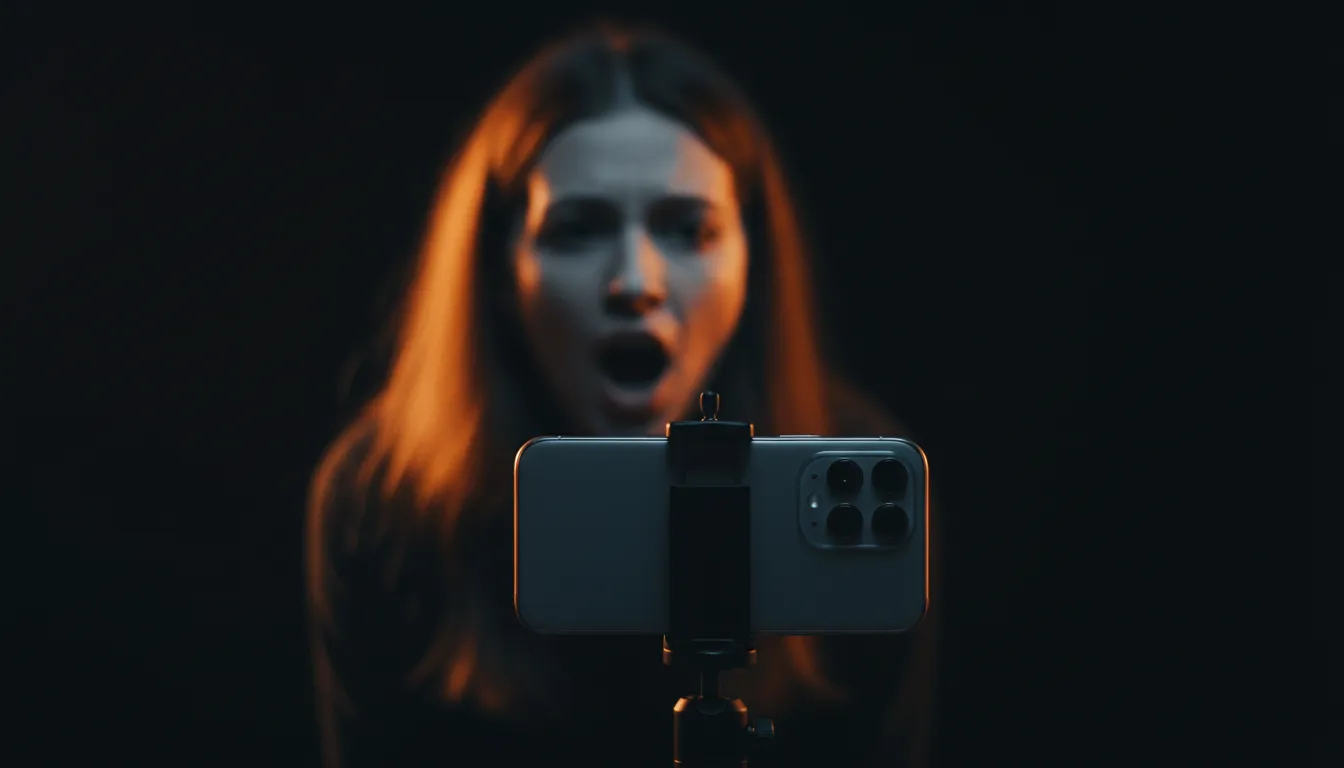
A face looking into a lens is the most common first frame on TikTok, and it is also the easiest one to scroll past. Nothing about it tells the viewer what they are about to get. The talking heads that hold people are not the ones with the best face or the best lighting. They are the ones where something has already happened by the time the first second ends.
Here is the direct answer. The best talking head video tips all come down to one rule: never open on a still face waiting to speak. Start mid-sentence, start with movement or a cut, and make the first words a specific claim that tells the viewer why you are worth hearing. Then frame the shot so all of that reads on a small screen held at arm’s length.
Why a still face is the weakest opener
When a viewer lands on your video, they decide in a fraction of a second whether it is for them. A talking head gives them very little to decide with. There is no product, no location, no visible problem. There is a person, and a person on its own is not yet a reason to stay.
Most weak talking heads open the same way. The creator hits record, takes a breath, settles their expression, and then starts. That half second of setup feels natural to film and reads as dead air to watch. Add a “hey guys” or “so today I want to talk about” and the viewer has spent their whole decision window on nothing.
In the talking-head videos we analyze, the gap between the strongest and weakest versions of the same format is wider than the gap between formats. Same setup, same kind of creator, very different outcomes. What separates them is rarely the camera. It is what happens in the opening moment. If you want the broader comparison between this format and its closest cousin, we covered it in green screen vs talking head.
Put motion or a cut inside the first second
A face that is already moving reads as a video that is already happening. That is the whole trick. You are not trying to be flashy. You are trying to remove the moment where the viewer can tell you have not started yet.
Practical ways to do it:
- Cut the breath. Trim the first frames until your mouth is already forming the first word. If you can hear the inhale, cut later.
- Walk into frame or lean in. A small physical movement toward the lens in the first second gives the eye something to track.
- Open on a punch-in. Start tight on your face, then cut wider on the second sentence. One cut early signals that this video moves.
- Hold up the thing. If you are talking about a product, a receipt, a screenshot or a tool, have it in your hand in frame one. A visible object answers “what is this about” faster than any sentence.
- Start mid-action. Already pouring the coffee, already opening the laptop, already turning toward the camera. The viewer joins something in progress.
None of this needs to be loud. A single cut or one movement is enough. The goal is that the first second contains a change, because a static frame is the clearest possible signal that nothing is happening yet. Our guide to visual vs verbal hooks goes deeper on how the picture and the words split the work.
The credibility line: why should they listen to you
A talking head has one asset, and that asset is you. So the first line has to answer the question every viewer is silently asking: why this person, on this topic, right now?
There are two strong ways to answer it, and one weak way.
Strong: show the proof. “I’ve reviewed 400 resumes this year and this one mistake shows up in half of them.” The number does the credibility work, and the stake is clear. You did not say you are an expert. You said something only someone with experience could say.
Strong: name the specific outcome. “This is the exact email that got my rent lowered by 200 dollars.” The outcome is concrete enough to be believable and specific enough to be interesting.
Weak: claim the title. “As a career coach with ten years of experience…” It is true, it is relevant, and it reads like the start of a pitch. Credentials work best when they arrive as evidence inside a useful sentence, not as a preamble before it.
Look at the difference in the first five words. The strong versions start with a number, an object, or a result. The weak version starts with a job title. When Blossom scores a talking-head opening, the feedback that comes back most often on weaker openers is exactly this: the promise is vague, or the reason to trust the speaker arrives too late.
Make the first sentence specific
Vague openers are the second most common reason talking heads lose people early, right behind the still face. “Here’s something nobody tells you about money” could introduce a thousand videos. The viewer cannot tell which one this is, so they move on.
Specific openers name the thing. Compare:
- “Here’s a tip for your skin” vs “Stop putting vitamin C on right after you wash your face.”
- “Let’s talk about productivity” vs “I deleted my calendar app for a month. Here’s what broke.”
- “Some advice for new managers” vs “Your first one-on-one should not have an agenda.”
The specific version does three jobs in one line. It tells the viewer the topic, it makes a claim they can agree or disagree with, and it creates a gap they want closed. That is why short, concrete statements tend to outperform questions that ask the viewer to do the thinking. If you want a full breakdown of what a hook is doing in those first words, start with the anatomy of a viral TikTok hook.
Framing that reads on a phone
Talking heads are filmed on a phone and watched on a phone, which sounds like an advantage until you look at how most of them are framed. The camera is too far away, the face sits in the bottom third, and captions land on the chin.
Framing rules that help the first second land:
- Eyes in the upper third. On a vertical screen, the eyes should sit roughly a third of the way down. That is where the viewer’s gaze naturally lands.
- Closer than you think. Head and shoulders, not waist up. At phone size, a face filmed from across the room has no expression. The viewer reads emotion from the eyes and mouth, so give them both.
- Keep the edges clear. The bottom and right side of the screen are covered by the caption, the username and the buttons. Anything important in those zones is invisible.
- Light the face, not the room. A window in front of you beats any overhead light. The face should be the brightest thing in frame so the eye goes there first.
- One clean background. A busy shelf behind you competes with your face for the first glance. Plain or softly out of focus wins.
Gear helps less than most creators expect. We looked at that question in what gear actually moves retention, and the short version is that framing and light do more than any upgrade to the camera itself.
Captions: the second hook on a muted feed
A large share of viewers start with sound off. For a talking head, that means the first second may be judged on the caption alone. If your caption does not appear until second two, the silent viewer sees a person moving their mouth and nothing else.
Put the first line on screen from frame one, and make it the same specific claim you are saying out loud. Keep it short enough to read in a glance, and place it in the upper middle of the frame where it does not collide with the interface or your face. The caption is not a transcript. It is the hook, written down.
A simple test before you post
Before you post a talking head, watch only the first second with the sound off, then once more with sound on. Ask yourself four things:
- Is anything moving or changing? If the first frame could be a still photo, cut tighter or add motion.
- Can I tell the topic? A muted viewer should know roughly what the video is about from frame one.
- Why should I trust this person? The first line should contain a number, an object or a result, not a job title.
- Is the face readable at phone size? Eyes in the upper third, close enough to see expression, nothing important at the edges.
If any answer is no, fix that one thing and reshoot the opening only. You rarely need to refilm the whole video. Most talking heads are rescued by a better first three seconds.
How Blossom helps with talking-head openings
When you run a talking-head video through Blossom, the analysis looks at the opening the way a viewer does. It scores your hook from 1 to 10 and explains why, flags when the promise is vague or the reason to trust you arrives too late, and points to the exact moment the opener loses momentum. It also shows you how strong talking heads in your category open, drawn from our library of analyzed videos, so you can see the pattern instead of guessing at it.
The goal is not a perfect face or a perfect setup. It is a first second that tells the viewer something has already started, and a first sentence that gives them a specific reason to stay for the next one. If you want to check an opening before it goes live, our guide on whether your hook is working walks through what to look for, and the FAQ covers what Blossom analyzes and how to start.
Read next

Best viral.app Alternatives in 2026 (Free & Paid)
Five real viral.app alternatives, free and paid, compared on one question: does the tool score your hook and tell you why it works? Checked 26 Oct 2026.
Why Specific Hooks Beat Vague Ones (and How to Sharpen Yours)
Specific hook examples for TikTok: why a number, place or stake in the first line holds viewers a vague promise loses, and how to rewrite a soft hook three ways.

Blossom vs Iconosquare: Post Types vs a Name for the Video's Shape
Iconosquare vs Blossom: Iconosquare compares Reels, carousels and posts. Blossom names the structure inside each video, so a winning shape becomes repeatable.