Voiceover vs Talking to Camera: Which Holds Attention Longer?
Voiceover vs talking to camera on TikTok: a face buys trust and pacing control, a voiceover buys density and proof. Which formats favor which, and the hybrid.

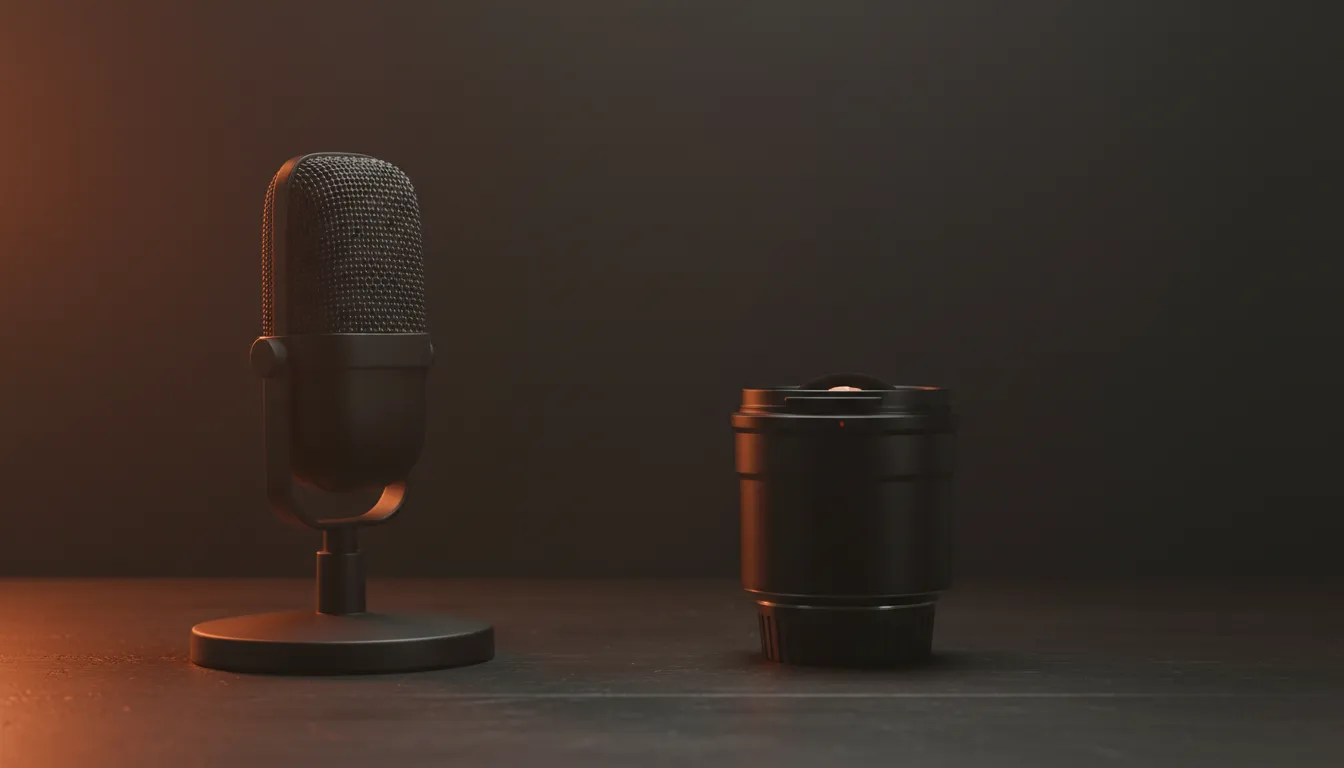
Neither one holds attention longer. That is the honest answer, and it is also the least useful one, because the creators asking are really asking something sharper: which one should I use for the video I am about to make?
Here is the direct answer. Talking to camera holds attention when the viewer needs to trust a person. A voiceover holds attention when the viewer needs to see a thing. A face buys credibility, emotion, and control over pacing. A voiceover buys density, proof on screen, and the freedom to cut every second. The format that wins is the one whose strength matches what your video is actually selling, and the best performers in most niches stop choosing and use both inside a single video.
The rest of this post breaks down what each delivery really does for retention, which formats lean which way, where each one fails, and the hybrid structure we see over and over among the stronger videos in our library.
What each delivery is actually doing
It helps to stop thinking of these as “styles” and start thinking of them as two different contracts with the viewer.
Talking to camera says: stay with me, the person. The viewer reads your face before they process a single word. Eye contact, micro-expressions, and the energy in your first line all arrive at once, and that is a lot of information in one frame. The cost is that the frame barely changes. Your face is the visual, so every second has to be carried by delivery.
A voiceover says: look at this. The voice becomes a guide and the screen becomes the evidence. Every sentence can be paired with a new shot, so the visual changes as fast as the script does. The cost is that the viewer has no person to read. Trust has to come from what they see, not who they see.
That single difference explains almost everything else in this post.
Where talking to camera wins
A face is not decoration. It does work no other element in the frame can do, and some content cannot survive without it.
- Opinion and hot takes. “Most budgeting advice is wrong” needs a person standing behind it. A voiceover over stock footage reads as a slideshow with an attitude.
- Advice from experience. When the authority is you (a nurse, a recruiter, a coach), the viewer is evaluating whether to believe you. They need your face to do that.
- Stories with emotional beats. A pause, a raised eyebrow, a half laugh before the punchline. These are retention events, and they only exist on camera.
- Direct address that filters the audience. “If you run a small bakery, this is for you” lands harder from a person looking straight down the lens. We covered why that kind of line grows accounts in the hook that tells viewers to leave.
What travels with the stronger talking-to-camera videos is consistent across niches: a clear one-sentence promise, delivery with real charge, and a pace that does not linger. A flat, slow read to camera is one of the most common traits among the weaker posts in this format. When the face is the only visual, low energy has nowhere to hide.
Where a voiceover wins
A voiceover shines anywhere the viewer would rather look at the subject than at the person explaining it.
- Tutorials and process. Cooking, editing, skincare routines, software walkthroughs. The viewer wants to watch the hands, the pan, or the screen, not your face describing them.
- Before and after. The transformation is the hook. A face in front of it only delays the payoff.
- Explainers with evidence. Charts, screenshots, product close-ups, maps. Each claim gets its own shot, which turns every sentence into a small visual reset.
- Dense information. A voiceover script can be tighter than natural speech because nobody is watching your mouth. Fewer filler words, no “um”, no visible breath between points.
The retention advantage of a voiceover is visual change on demand. In a talking-to-camera video, the frame changes when you cut. In a voiceover, the frame can change on every claim. We wrote about how to make those cuts count, rather than filling them with generic stock, in B-roll that holds attention. The short rule: every shot should prove the sentence playing over it.
Where each one reliably fails
Both formats have a signature failure, and they are mirror images.
Talking to camera fails when the face has nothing to carry. The classic version is a three-second “hey guys” intro with no information, followed by a monologue in one static framing. Nothing changes on screen, the energy is flat, and the promise is vague. The viewer has no reason to stay because there is no visual momentum and no emotional pull.
A voiceover fails when the visuals are wallpaper. The classic version is a well-written script read over loosely related clips: a city skyline for a finance tip, a stock gym shot for a fitness claim. The viewer’s eyes stop doing any work, the voice becomes background noise, and the swipe comes fast. A voiceover over filler is weaker than a mediocre talking head, because it removes the person without adding any proof.
There is a second voiceover failure worth naming: the detached read. Recording a script in a flat narrator voice strips out the emphasis that made it interesting. If you go voiceover, read it like you are telling a friend, not like you are narrating a documentary. We looked at how much of that emphasis disappears with a synthetic voice in text-to-speech or your own voice.
The muted-autoplay problem
A large share of short-form video is watched with the sound off, at least for the first second. That changes the math for both deliveries.
- Talking to camera, muted, is a person moving their mouth. Without on-screen text, a silent scroller gets nothing. The face can still carry emotion, but not the point.
- A voiceover, muted, is just the visuals. If the shots prove the claim on their own, the video still works. If they are filler, it is a slideshow of nothing.
Either way, the fix is the same: put the promise on screen in the first frame. For a talking head, that means a short text line that states what the viewer is about to get. For a voiceover, it means opening on the most self-explanatory shot you have. We covered how text acts as the first voice in do on-screen captions actually increase views.
The hybrid most strong videos use
When we look across the formats in our library, the stronger videos in many niches are neither pure talking head nor pure voiceover. They switch.
The most common structure looks like this:
- Open on your face. The first second is a person stating a clear, specific claim with real energy. This is where trust and the hook live.
- Cut to voiceover over proof. As soon as the claim needs evidence, the face leaves and the screen shows the thing: the result, the process, the screenshot. Your voice keeps going.
- Return to camera for the turn. The key insight, the opinion, or the emotional beat comes back on your face, because that is where it lands hardest.
- Close on your face or your result. End on whichever one gives the viewer a reason to save or send.
This structure works because it gives each delivery the job it is best at. The face sells the claim. The voiceover proves it. The viewer gets both trust and visual momentum, and the cut between them is itself a small re-hook. If you want to go deeper on placing those mid-video resets, see the mid-roll re-hook.
It also solves a practical problem: you do not need to be on camera for the whole video, and you do not need hours of B-roll. A few seconds of face at the open and the turn, with proof shots in between, is enough.
How to decide for your next video
Before you film, answer three questions about the video, not about yourself.
- What is the viewer evaluating: a person or a thing? If they are deciding whether to believe you, lead with your face. If they are deciding whether the result is real, lead with the result.
- Can every sentence be shown? If most lines in your script have an obvious shot that proves them, a voiceover will out-pace a talking head. If most lines are opinion or story, the face does more work.
- What does the video look like muted? Watch your draft with no sound. If the screen tells the story, voiceover is safe. If it is a face with no text, add the promise on screen before you post.
Then check what is already working in your niche. Format norms differ a lot by topic. A finance niche might reward straight-to-camera opinion, while a cooking niche almost never shows the creator’s face for more than a second. Studying 20 to 30 strong videos in your own topic before you commit will tell you more than any general rule, which is the whole argument of study 25 videos before you post.
Where Blossom fits
Blossom analyzes any public Instagram or TikTok video and names the format it is running, so you can see whether the videos winning in your niche are straight-to-camera, voiceover over footage, or a hybrid that switches between the two. It scores the hook from 1 to 10 with the reasoning behind the score, and maps where attention builds or drops with timestamps, so you can see exactly where a monologue went flat or where a voiceover lost its visuals.
Our library of 220,000+ analyzed videos is organized into 4,900+ named formats. Open the formats in your own topic, and you can study how the strongest versions open, when they cut away from the face, and how fast they move. Scores describe the content, not a forecast of views. The FAQ covers what each plan includes, and you can run your own videos through it.
The short version
- Talking to camera sells trust. Voiceover sells proof. Pick based on what the viewer needs to believe.
- A face fails when it has nothing to carry. Flat energy and one static framing are the usual cause.
- A voiceover fails over filler. Every shot should prove the line playing over it.
- Put the promise on screen either way. Muted viewers decide in the first frame.
- The hybrid often wins. Open on your face, cut to proof, return to camera for the turn.
Read next

Best viral.app Alternatives in 2026 (Free & Paid)
Five real viral.app alternatives, free and paid, compared on one question: does the tool score your hook and tell you why it works? Checked 26 Oct 2026.
Why Specific Hooks Beat Vague Ones (and How to Sharpen Yours)
Specific hook examples for TikTok: why a number, place or stake in the first line holds viewers a vague promise loses, and how to rewrite a soft hook three ways.

Blossom vs Iconosquare: Post Types vs a Name for the Video's Shape
Iconosquare vs Blossom: Iconosquare compares Reels, carousels and posts. Blossom names the structure inside each video, so a winning shape becomes repeatable.