How to Structure a Product Review Video for TikTok and Reels
How to make a product review video for TikTok that people trust: verdict first, one test that proves it, an honest negative, and a close that earns the save.

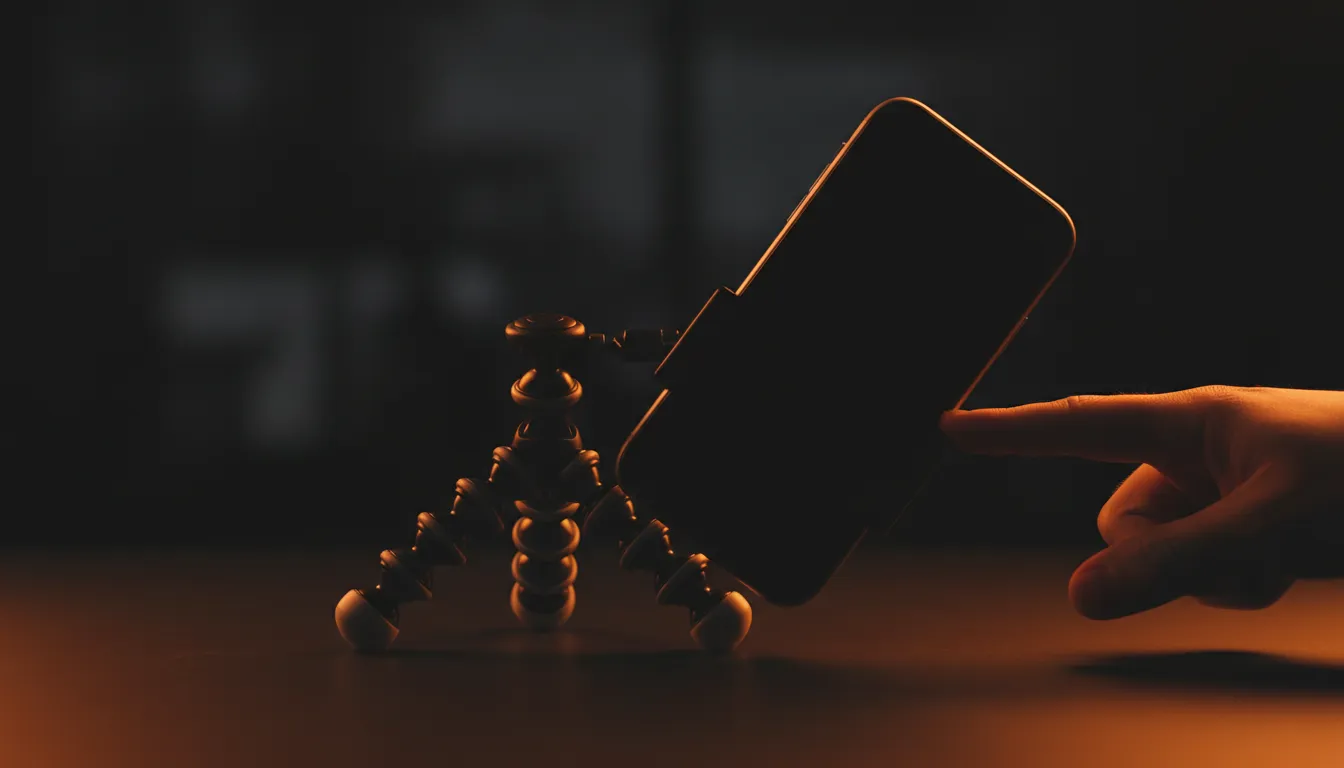
The product review videos that get skipped are not the badly filmed ones. They are the ones that sound like the box. A viewer can tell within two seconds whether they are about to watch a test or a pitch, and a pitch dressed as a review is the single fastest way to lose someone who was genuinely about to buy.
Here is the direct answer to what you searched. A product review video for TikTok or Reels works when it leads with the verdict, proves that verdict with one test the viewer can see, includes at least one honest negative, and closes with a reason to save rather than a reason to buy. That order is not a style choice. It is the order in which a skeptical stranger decides whether to keep watching. The rest of this post walks through each beat, what it looks like on screen, and the mistakes that turn a review into an ad.
Why reviews are judged faster than any other format
A tutorial gets a few seconds of goodwill because the viewer wants the skill. A day in the life gets a few seconds because people are curious about other people. A review gets almost nothing, because the viewer arrives already suspicious. They have seen a thousand “honest reviews” that were paid, and their default assumption is that yours is too.
That changes what the first two seconds have to do. In most formats the hook creates curiosity. In a review, the hook has to create credibility first and curiosity second. The viewer is not asking “what happens next”. They are asking “is this person going to tell me the truth”.
Our library of analyzed videos shows the pattern clearly across niches. Review videos that hold attention open with a conclusion, a number, or a visible result. The ones that leak viewers open with the unboxing, the brand name, or the phrase “so I finally got my hands on”.
Beat one: lead with the verdict
Say what you concluded before you say anything else. “This is the best budget tripod I have used, and it has one problem.” “I returned this after four days.” “Worth it at $40, not at $80.” The verdict goes in the first line, spoken and on screen, with the product visible.
This feels backwards to most creators because it kills the suspense. That is the point. Suspense is a tool for formats where the viewer trusts you. In a review, withholding the verdict reads as stalling, and stalling reads as a sales script. Giving the answer away up front does the opposite: it signals that you are not trying to keep them watching for the sake of it, which is exactly what makes them keep watching.
A verdict also does something a question cannot. It gives the viewer a claim to check. “Is it really the best budget tripod?” is a reason to stay for the next thirty seconds. “Let’s find out if this is any good” is a reason to scroll, because the viewer already suspects how it ends. We covered the mechanics of specific claims in Question Hooks: Engineering the Curiosity Gap, and the same rule applies here with one twist: in a review, the claim is your opinion, stated as a fact you are about to back up.
Beat two: the one test that proves it
A review needs a test the viewer can watch, not a list of features they can read on the product page. One test, chosen because it decides the verdict. If you said “best budget tripod”, the test is the thing a cheap tripod fails at: load it with a heavy phone, extend it fully, and tap the leg. If you said “I returned it”, show the moment that made you return it.
The test has three jobs, and the order matters:
- Set the stake in one line. “The whole question with a cheap tripod is whether it wobbles at full height.”
- Run it on camera, uncut where it counts. A visible result beats a described one. If the thing wobbles, let it wobble in frame.
- Name what the result means. “That’s a two-second settle, which is fine for talking head and useless for product shots.”
Creators who skip the test and jump from verdict to features lose the viewer at exactly that transition. Features are what the brand says. A test is what you saw. The difference between the two is the entire reason anyone watches a review instead of reading the listing.
This is the same reason the reveal works in a transformation video. The viewer is not watching to be told, they are watching to see. We wrote about the proof versus filter problem in Before and After Videos, and the same trust test applies: a result that could have been faked is worth less than a smaller result that visibly was not.
Beat three: the honest negative
Every product has one. If your review does not mention it, the viewer assumes you were paid to leave it out, and everything you said before it loses value retroactively. The negative is not a courtesy. It is what makes the positive believable.
The negative needs to be real, specific, and proportionate. “The app is a bit clunky” is filler. “The app logs you out every time you switch phones, which matters if you share it with a partner” is a negative a viewer can weigh. Proportion matters too: if the problem would stop you buying it, say so, and if it would not, say that instead.
Place it after the test and before the close. Putting it first makes the review sound like a takedown. Putting it last makes it sound like a disclaimer. In the middle, after the viewer has seen the proof, it reads as what it is: a person telling you the whole picture.
In our analyzed library, reviews that include a clear, specific negative tend to hold attention through the second half far better than reviews that are uniformly positive. The viewer who was waiting for the catch gets it, and stays.
Beat four: the close that earns a save
The last line of a review decides what the viewer does with it. Most reviews end with “link in bio” or “let me know if you want a part two”, and both are weak because they ask the viewer to do something for you. A review close works when it gives the viewer something to do for themselves.
The strongest shape is the decision rule: “Buy it if you shoot talking head. Skip it if you shoot product.” That one line turns your video from an opinion into a tool, and tools get saved. It also handles the viewer who was never going to buy, which is most of them: they still got something.
A note on what the high-performing videos in our library actually ask for: most of them never ask out loud at all, and the ones that do put the ask at the very end, after the value has been delivered. A review that stops the test to say “make sure you follow” has broken its own format. If you ask, ask once, last, and only after the decision rule. We go deeper on closing lines in Earn the Save.
Why reviews that read like ads get skipped
There are three tells that flip a viewer from “review” to “ad” in under a second, and all three are avoidable.
- The brand name before the verdict. Opening with the product’s full name and the brand’s tagline is how a sponsor writes, not how a person talks. Say what it is after you say what you think.
- A feature list instead of a test. Reading the spec sheet, even enthusiastically, is the product page with a face. The viewer can tell nothing was tested.
- No negative, or a negative that is really a compliment. “The only downside is that I want to use it for everything” is the line that ends more reviews than any other.
There is a fourth, which is not about the script. If the review is sponsored, say so, plainly, early. Disclosure does not hurt a review that has a real test and a real negative. Hidden sponsorship, when viewers work it out from the tone, hurts every review you post afterwards. The trust you are building is per account, not per video, which is the same logic we laid out in What Brands Actually Check Before They Pay You: the audience is the asset, and a review that spends it for one deal is a bad trade.
A review, beat by beat
Here is the skeleton for a thirty to forty-five second review, with the timing that tends to hold.
- 0 to 2 seconds. Verdict. Product in frame, your conclusion spoken and on screen. “Best budget tripod I have used. One problem.”
- 2 to 5 seconds. Stake. The one question that decides it. “The whole test with a cheap tripod is wobble at full height.”
- 5 to 20 seconds. The test. Run it, show it, read the result. This is the longest beat and the only one that should feel unhurried.
- 20 to 30 seconds. The negative. Specific, proportionate, with a verdict on whether it matters. “The quick-release plate is proprietary. Lose it and you are buying a new one, which I did.”
- 30 to 40 seconds. The decision rule. “Buy it for talking head. Skip it for product shots.”
- Last 2 seconds. Optional ask. One, if any. “Saved you from a return? Save this.”
If the product needs two tests to decide, make two videos. One product, one verdict, one test is the unit. Everything else is a series, and part two videos built on an honest first review carry trust forward instead of rebuilding it.
What our analysis shows about review videos
When we score a product review in Blossom, the same two weaknesses come back more than any others.
The first is a hook that names the product instead of the verdict. The analysis flags it as a promise that is missing: the viewer has been told what the video is about, but not why they should care, and the drop-off in the first few seconds reflects that. The fix is almost always the same line, moved earlier.
The second is a middle with no visible test. The retention map shows a long, flat section where the creator is talking about the product rather than doing something with it, and the drop runs steadily through it. The whole section is the problem, and the fix is a test, not a tighter edit.
Blossom scores the hook, maps where attention drops with timestamps, and names the single change with the most leverage. For a review, that change is usually structural: put the verdict first, replace the feature list with a test, or add the negative that is missing. The score is a content-side estimate, not a promise about views, and you can read more about what it does and does not claim on our FAQ.
The short version
Lead with the verdict. Prove it with one test the viewer can see. Include a real negative, in the middle, with a judgment on whether it matters. Close with a decision rule, not a request. Say what it is after you say what you think, and disclose anything that needs disclosing before anyone has to guess.
A review is the one format where the audience arrives distrusting you. The structure above is how you earn that trust in thirty seconds, and keep it for the next one. We are not asking you to be more enthusiastic. We are asking you to be more useful, and the views follow usefulness in this format more reliably than in any other.
Read next

Best viral.app Alternatives in 2026 (Free & Paid)
Five real viral.app alternatives, free and paid, compared on one question: does the tool score your hook and tell you why it works? Checked 26 Oct 2026.
Why Specific Hooks Beat Vague Ones (and How to Sharpen Yours)
Specific hook examples for TikTok: why a number, place or stake in the first line holds viewers a vague promise loses, and how to rewrite a soft hook three ways.

Blossom vs Iconosquare: Post Types vs a Name for the Video's Shape
Iconosquare vs Blossom: Iconosquare compares Reels, carousels and posts. Blossom names the structure inside each video, so a winning shape becomes repeatable.