No-Cut TikTok Videos: Does One Take Get Fewer Views?
One-take, no-cut videos reached 34% fewer views than typical in Blossom's data, but a single shot over an upbeat track reached more than three times typical.

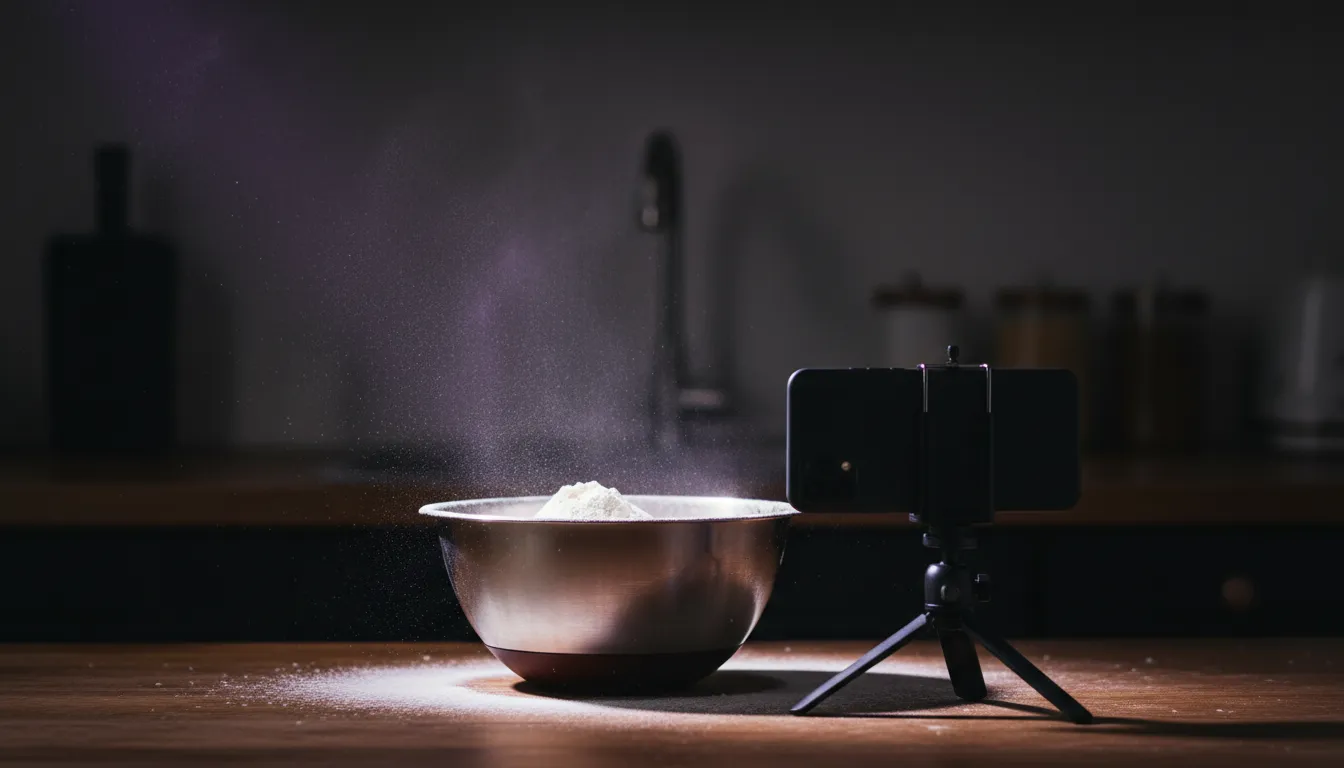
A video filmed in one continuous take usually gets less reach than an edited one, and the right track closes the gap. In Blossom’s library, single-shot videos reached 1.48 times the views their account usually gets (16,948 videos), against 2.25 times for a typical video (52,022 videos). That’s about 34% lower, going by the two numbers side by side.
Pair that same fixed shot with an upbeat track and it reached 7.38 times (714 videos), about 228% above typical. So a single take can work well, as long as the sound carries the energy that cuts would otherwise add.
Do no-cut TikTok videos get fewer views?
Yes, on average they get fewer views than edited ones. One fixed camera angle for the whole clip is the most common of the four camera framings Blossom ranks, with 16,948 videos in the last 180 days, and it sits a third below a typical video.
That’s partly because so many low-effort clips are one take. A phone propped on a counter while you talk to it is the default, and it’s also what the For You page has seen thousands of times today.
One-take videos ranked by what’s paired with them
Here’s how one-shot videos did with different partners. The table shows a selection from the top 20 pairings by reach, each with at least 30 videos.
| One take plus… | What you’d see | Times the account’s usual views | Videos |
|---|---|---|---|
| Upbeat music | A fixed shot over an energetic track | 7.38 | 714 |
| Cuts timed to the beat | Movement or text changes landing on beats | 4.46 | 2,175 |
| Trending sound | A popular audio under one shot | 3.48 | 2,809 |
| Ambient sound | Real room or outdoor sound, no track | 2.83 | 539 |
| Emotional music | A slow track under one shot | 2.40 | 1,641 |
| Call to action | An ask to follow, save or comment | 1.82 | 1,441 |
| Text hook | Text on screen carries the opening | 1.80 | 4,326 |
| Looking into the lens | Talking straight to the camera | 1.66 | 1,878 |
The top half is all audio. The bottom half is the classic talking-head take: a person, a text line, an ask.
When a single shot works
A fixed shot does well when something in the frame changes on its own. A dance, a recipe coming together, a timelapse, a pet reacting, a cleaning job. The camera holds still while the action moves, so the viewer always has something to follow.
It does worse when the only thing moving is your mouth. One take plus direct eye contact reached 1.66 times (1,878 videos), about 26% below a typical video.
How to make a no-cut video hold viewers
- Pick the track first. Choose an upbeat song or a trending sound, then plan the action to fit it. In Blossom’s data that pair reached 7.38 times the account’s usual views.
- Let the action land on the beat. Even without cuts, a step, a flip or a text change can hit the beat. That’s the 4.46 times row in the table above.
- Use the room’s own sound. If music feels wrong for the clip, record real sound with a clear source: sizzling, rain, typing. Single takes with ambient sound reached 2.83 times the account’s usual views (539 videos).
- Put the change in frame. Choose a subject that moves or transforms during the clip so the viewer has a reason to watch to the end.
- Cut the talking-head take if it drags. If your one-take video is you explaining something, add at least a jump cut or two.
A one-take video that fits the pattern
Picture a 12-second fixed shot of a kitchen counter. Flour, eggs and a bowl sit in frame, and an upbeat track starts on the first frame. Each ingredient drops in on a beat, and the finished dough lands on the last one.
The whole clip is one take with hands only and a track underneath. It’s the single-shot plus upbeat music shape from the top of the table.
Check your take before you post
Blossom reads the audio in your draft, checks whether the action lines up with the beat, and gives your opening a Hook Power score out of 100. It’ll tell you if your one-take video matches the shape at the top of the table or the bottom. Blossom scores the video; it can’t promise views. Check your next take.
For more on editing, read Blossom’s data on fast cutting and editing to the beat. For audio choices, see trending sound vs original audio.
FAQ
Do TikTok videos need cuts to get views?
They can get views in one take, and cuts or a strong track help a lot. One-take videos reached 1.48 times the account’s usual views (16,948 videos), against 2.25 times for a typical video.
What’s the best music for a one-take video?
An upbeat track is the best choice going by Blossom’s data. That pair reached 7.38 times the account’s usual views (714 videos).
Are talking-head videos in one take bad?
They sat below average in Blossom’s data. One take while looking into the lens reached 1.66 times (1,878 videos), about 26% below a typical video.
Should I add text to a one-take video?
Text helped less than sound did in Blossom’s data. One take with a text hook reached 1.80 times (4,326 videos), still about 20% below typical.
How we measured this
Figures come from Blossom’s library of analyzed TikTok and Instagram videos from the last 180 days, pulled on 2026-11-13. For each video we compare its views with the views its account usually gets, and report the median so one breakout video can’t skew a result. Every comparison has at least 30 videos on each side.
- Single shot, no cuts: 16,948 videos, 1.48 times; typical video: 52,022 videos, 2.25 times (1.48 / 2.25 = 0.66, about 34% lower)
- Single shot plus upbeat music: 714 videos, 7.38 times (7.38 / 2.25 = 3.28, about 228% higher)
- Single shot plus looking into the lens: 1,878 videos, 1.66 times (about 26% lower than typical)
- Pairs: each row lists its own count; the smallest printed row has 539 videos
The pair figures come from a slightly different slice of the same 180 days, so they differ slightly from the single-style figure. This shows what went together with reach, and it can’t show what caused it.
Read next

Are Before and After Videos Dead? What 2026 Data Shows
No, but how you open them matters. In Blossom's library, before and after videos that tease the result reach 2.71 times an account's usual views.

Are Challenge Videos Dead on TikTok and Reels? 2026 Data
No. Blossom data shows challenge videos at 3.31 times an account's usual views across 767 videos, and their share of new posts is rising.

Are Dance Trends Dead on TikTok? What the Data Shows in 2026
No. In Blossom's library, dance trends took a 2.87 times larger share of dance videos in the last four weeks (106 videos) than in the eight weeks before (135).