Fitness Video Camera Angles Ranked by Reach (Blossom Data)
Fitness video camera angles ranked: faceless workout clips reached 6.91 times their usual views in Blossom data, against 1.73 times for talking to the lens.

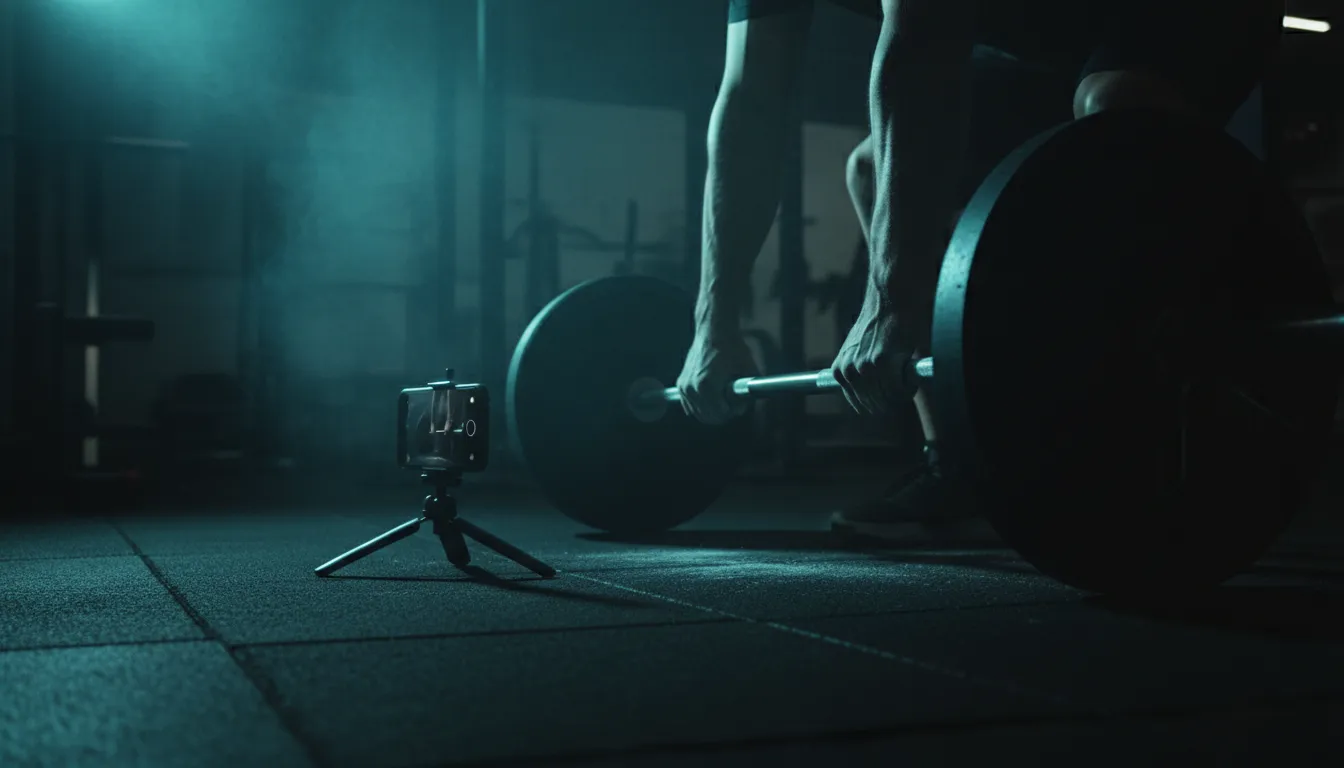
The camera angle that reaches furthest in fitness is the one where your face stays out of the shot. In Blossom’s library, faceless fitness videos, carried by hands, the bar, a point-of-view shot or a voiceover, reached 6.91 times the views their account usually gets (271 videos). Fitness videos where the creator looks straight into the lens reached 1.73 times (448 videos), so faceless clips came out about 299% higher.
The typical fitness video reached 2.16 times its account’s usual views (4,450 videos). Only two framing choices beat it, and one of them beat it by a wide margin.
Fitness camera angles ranked by reach
These are all four framing choices with at least 30 fitness videos in Blossom’s library from the last six months, sorted from the highest reach to the lowest.
| How the fitness video is framed | Times the account’s usual views | Videos | Against the typical fitness video |
|---|---|---|---|
| Faceless: hands, gear or POV carry it | 6.91 times | 271 | about 220% higher |
| Tight close-ups on hands, muscles or gear | 2.84 times | 296 | about 31% higher |
| One fixed camera angle, no cuts | 2.13 times | 1,309 | about 1% lower |
| Looking straight into the lens | 1.73 times | 448 | about 20% lower |
The single fixed angle is the most common setup by far, with 1,309 videos. It’s the phone propped on a bench filming the whole set, and it lands right at the typical fitness video. It’s easy to film, so it’s everywhere, and it doesn’t separate your clip from the rest of the feed.
What is the best camera angle for workout videos?
A faceless angle that keeps the movement in frame works best in Blossom’s fitness data, with tight close-ups in second place. So film the bar path, your hands on the handles, or a low shot of your feet on the platform, and let text or a voiceover carry the coaching.
That doesn’t mean your face hurts the video on its own. It means fitness viewers on TikTok and Reels came for the movement, and framing that puts the movement first tends to hold them.
What to pair with a faceless fitness video
Faceless fitness clips vary a lot depending on what you add. Here’s what they reached with other choices on top, against 6.91 times for faceless fitness videos overall.
- Showing the result in the first second: faceless clips reached 13.79 times (34 videos), about 100% higher.
- Opening with a line of text: they reached 12.59 times (78 videos), about 82% higher.
- Walking through it step by step: they reached 11.16 times (67 videos), about 62% higher.
- Asking viewers to save or try it: they reached 9.90 times (43 videos), about 43% higher.
- Setting it to a trending sound: they reached 8.21 times (42 videos), about 19% higher.
And here’s where faceless fitness clips lost ground against their own level:
- Leaving the camera on one fixed angle: they reached 5.26 times (52 videos), about 24% lower.
- Building it as a before and after: they reached 4.84 times (37 videos), about 30% lower.
- Framing it as a problem and a fix: they reached 4.46 times (42 videos), about 35% lower.
- Running text through the whole video: they reached 4.44 times (79 videos), about 36% lower.
So one short text hook at the start helped, and a wall of text through the whole clip didn’t. Faceless works best with a few angle changes and a clear sequence of steps.
A faceless fitness video, described
Picture a 12-second clip that opens low on the floor, behind a loaded barbell. Text reads “the cue that fixed my deadlift” for one second, then disappears. The next shots are tight: chalked hands on the bar, the hips dropping, the bar rising past the knees, each one cut a beat apart.
You never see a face. The viewer sees exactly what to copy, in the order to copy it, and that’s the version that tends to get saved.
How to film faceless fitness content this week
- Set two angles: one low and wide for the full movement, one close on your grip or feet.
- Open on the finished rep: show the clean lift or the full range in frame one.
- Add one text hook: a single line in the first second, then let the footage work.
- Cut between steps: change the angle each time the cue changes.
- Record a short voiceover: one sentence per step, if the cue needs words.
For openings that fit this style, see how to start a fitness video. For sound choices, check the fitness audio benchmarks, and for the broader picture read what works in faceless content.
Check your framing before you post
Blossom breaks down every fitness video you upload, including how it’s framed, what happens in the first three seconds and how the cuts are paced, then compares it with fitness videos that reached far beyond their account’s usual views. You’ll know whether your clip reads as faceless coaching or a static set before it goes live. Blossom scores the video; it can’t promise views. Analyze your next workout video.
FAQ
Do faceless fitness videos get more views?
Yes, in Blossom’s data. Faceless fitness videos reached 6.91 times their account’s usual views (271 videos), about 220% above the typical fitness video at 2.16 times.
Should I talk to the camera in my workout videos?
It’s fine for some formats, though fitness videos where the creator looks into the lens reached 1.73 times their usual views (448 videos), about 20% below the typical fitness video.
Is filming my whole set from one angle enough?
It gets you an average result, since one-angle fitness videos reached 2.13 times their usual views (1,309 videos), right at the typical fitness video.
Do close-up shots help fitness videos?
They help a little, since fitness videos with tight close-ups reached 2.84 times their usual views (296 videos), about 31% above the typical fitness video.
How we measured this
Figures come from Blossom’s library of analyzed TikTok and Instagram videos, pulled on 2026-11-14, using videos Blossom classed as health and fitness content from the last 180 days. For each video we compare its views with the views its account usually gets, and report the median so one breakout video can’t skew a result. Every comparison has at least 30 videos on each side.
- Typical fitness video: 4,450 videos at 2.16 times
- Framing: faceless 271 videos at 6.91 times; close-ups 296 at 2.84; one fixed angle 1,309 at 2.13; looking into the lens 448 at 1.73
- Faceless videos paired with: result in the first second 34 at 13.79; text hook 78 at 12.59; step by step 67 at 11.16; save or try ask 43 at 9.90; trending sound 42 at 8.21; one fixed angle 52 at 5.26; before and after 37 at 4.84; problem and fix 42 at 4.46; text through the video 79 at 4.44
One video can carry more than one framing choice, so the groups overlap, and the pairings rest on smaller samples than the main ranking. This shows what went together with stronger reach, and it can’t show what caused it.
Read next

Are Before and After Videos Dead? What 2026 Data Shows
No, but how you open them matters. In Blossom's library, before and after videos that tease the result reach 2.71 times an account's usual views.

Are Challenge Videos Dead on TikTok and Reels? 2026 Data
No. Blossom data shows challenge videos at 3.31 times an account's usual views across 767 videos, and their share of new posts is rising.

Are Dance Trends Dead on TikTok? What the Data Shows in 2026
No. In Blossom's library, dance trends took a 2.87 times larger share of dance videos in the last four weeks (106 videos) than in the eight weeks before (135).