Behind-the-Scenes Videos: Why the Process Can Outperform the Product
Behind the scenes content ideas that hold attention: make the process the hook, save the reveal for the end, and keep the mess that proves the work is real.

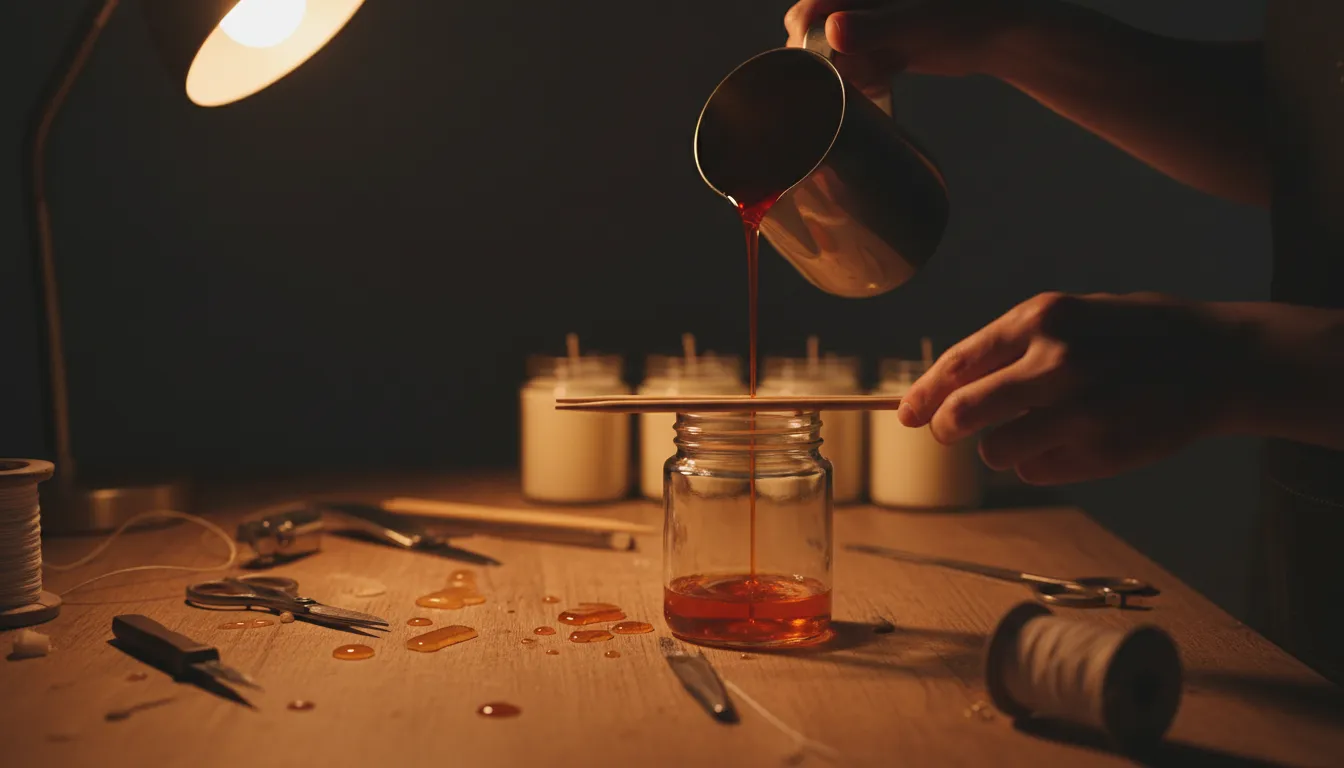
Behind-the-scenes content works best when the process is the hook, the finished result waits until the end, and the messy moments stay in because they prove the work is real. Blossom’s data backs the “process” part. In Blossom’s library, process demonstrations that show one thing made from start to finish reached 2.87 times the views their account usually gets (70 videos), against 1.99 times for general behind-the-scenes videos (1,021 videos), about 44% higher.
So a loose tour of your studio does less than one clear make, from raw material to finished piece. Here’s how to open on the process, where to put the reveal and how a small business can turn daily work into a steady supply of videos.
Why the process beats the product
A product shot answers every question at once: the viewer sees it, decides whether they like it and moves on. A process shot opens a question, “what’s this going to become?”, and the viewer stays to get the answer.
Viewers also trust what they watch being made. A polished photo could come from anywhere, but watching someone pour, cut, stitch, sand or plate something is evidence of skill and care that a “handmade” caption can’t match.
The numbers line up with that. Art process videos, a sketch or painting compressed into a build-to-reveal, reached 3.06 times their usual views (956 videos), about 54% above general behind-the-scenes videos.
Make the process the hook
The first two seconds should show work already happening: hands moving, material changing, something mid-transformation. An empty workspace or a greeting spends those seconds on nothing.
Openings that carry the hook well:
- The strange-looking middle step: raw dough that looks like a mistake, a sculpture that’s still a block of clay, a wall stripped to the brick.
- The tool nobody expects: a hairdryer on a cake, a dental pick on a watch, tweezers on a bouquet.
- The volume shot: forty orders on the floor, a rack of identical pieces, a stack of raw material bigger than the person.
- The tense moment: the pour, the cut, the first test, anything that could go wrong right now.
Each one makes a stranger ask what’s going on, and that question buys the next few seconds. If your first frame could be the cover photo of your shop page, pick a different first frame.
Keep the camera close and your hands in frame. In Blossom’s library, tight close-ups on hands, textures and details reached 2.68 times their usual views (4,892 videos), and videos where the creator’s face never appears reached 4.19 times (4,193 videos), about 78% above the typical video at 2.36 times. Visual vs Verbal Hooks covers why the frame should work with the sound off.
Why should you save the reveal for the end?
Because the finished product is the answer, and showing it first spends the only reason to keep watching. In Blossom’s library, videos that show their most striking result in the first second reached 1.78 times their usual views (2,991 videos), about 25% below the typical video.
This is the open-loop logic of a before-and-after video, with one change. In a before-and-after the “before” is the hook; in behind-the-scenes content the hook is the “during”.
How long to hold it
Aim for 20 to 45 seconds. Compress the middle hard, with each stage cut to a second or two, and hold one or two shots on the moments that matter most, like the risky step or the satisfying one. Give the reveal two or three seconds so the viewer registers the result before the loop restarts.
Make the reveal earn it
A reveal only lands if it’s visibly different from the opening. Plan the first shot with the ending in mind, because more contrast between the raw first frame and the finished last frame means a stronger pull through the middle. Ending on a frame that sits well next to the first one makes a rewatch feel natural, as our guide to loop endings explains.
Why messy beats polished in behind-the-scenes videos
The format’s promise is “this is what it really looks like”, so too much polish works against it. The moments you’re most tempted to cut are often doing the most work:
- The mistake and the fix: a cracked glaze, a crooked seam, a sauce that split. Showing the fix proves skill better than a flawless run.
- The unglamorous step: sweeping, sorting, waiting for something to dry. One quick shot makes the rest feel real.
- The real workspace: a cluttered bench reads as a working studio, and a spotless one can read as a set.
- Your actual hands: paint under the nails, flour on the sleeve.
Messy is about what you leave in the story, while the filming itself stays clean. Light the work clearly, keep the camera steady and frame the action so viewers can see what’s happening. The gear that moves retention is a short list, and most of it is light and sound.
Voiceover or silent process?
Both work when you choose on purpose.
Silent process with real sound uses the scrape, the sizzle and the snip. It leans into the satisfying side of the format, travels across languages and works best when each step is visually obvious.
Process with a voice adds what the picture can’t show: why a step matters, what goes wrong if you rush it, how long it really took or what it costs. Skip the narration that describes what’s already on screen; “Now I’m pouring the wax” over a shot of wax being poured adds nothing.
Behind-the-scenes ideas for small businesses
This format suits small businesses because the work you already do is the content. You need a phone pointed at the bench, and that’s about it.
- “How is this made?” One product from raw material to finished piece, the core of the format.
- “How many?” Packing a big order or a full production batch, where the volume is the tension.
- “What goes wrong?” A failed batch and what you learned, which tends to pull comments.
- “What does it really take?” The hours, materials and steps most customers never see. This also explains your price.
- “Who’s behind it?” One person, one small team, one corner of a kitchen.
- “Custom order, start to finish.” A request comes in, you make it, and the customer’s reaction (with permission) closes the loop.
For the wider mix of what to post, see our guide to small business content.
Turning it into a series
“Making every order this week” or “one new design every Friday” gives returning viewers a reason to come back. A fixed structure also lets you change one thing per episode, like an earlier tense moment or a shorter middle, and compare. Day in the life videos use the same serial logic.
Checklist before you post
- Is something already being made in the first frame?
- Would a stranger ask “what’s this going to be?” after two seconds, with the sound off?
- Is the finished result held back until the end?
- Is the last frame visibly different from the first?
- Did you keep at least one honest moment: a mistake, a fix or the unglamorous step?
- If there’s a voice, does it add information the picture can’t show?
- Is the middle compressed, with only the key steps allowed to breathe?
Get a second read on your process video
Blossom gives your opening a Hook Power score out of 100 with the reason behind it, maps where attention is likely to dip across the timeline, and shows analyzed videos in your niche that used the same format. It’ll tell you whether your first frame opens a question worth waiting for. Blossom scores the video; it can’t promise views. Try it on your next behind-the-scenes video.
FAQ
Do behind-the-scenes videos get views?
They do best as a clear process. In Blossom’s library, general behind-the-scenes videos reached 1.99 times their usual views (1,021 videos), while start-to-finish process demonstrations reached 2.87 times (70 videos).
Should I show the finished product first?
Usually it’s better at the end. Videos that show their most striking result in the first second reached 1.78 times their usual views (2,991 videos), against 2.36 times for the typical video.
Do I need to show my face in a behind-the-scenes video?
No. Videos where the creator’s face never appears, carried by hands, voiceover or point-of-view shots, reached 4.19 times their usual views (4,193 videos).
How long should a behind-the-scenes video be?
Aim for 20 to 45 seconds, with a fast middle and a reveal held for two or three seconds.
How we measured this
Figures come from Blossom’s library of analyzed TikTok and Instagram videos, pulled on 2026-11-15, across all niches. Formats and techniques are each grouped from the videos that use them. For each video we compare its views with the views its account usually gets, and report the median so one breakout video can’t skew a result. Every figure rests on at least 30 videos.
- Formats: behind the scenes 1,021 videos at 1.99 times; process demonstration 70 at 2.87; art process 956 at 3.06
- Techniques (last 180 days): typical video 49,324 at 2.36; close-up detail 4,892 at 2.68; face never shown 4,193 at 4.19; result shown in the first second 2,991 at 1.78
The format and technique figures come from separate groupings, so compare within each list. This shows what went together with stronger reach, and it can’t show what caused it.
Read next

Are Before and After Videos Dead? What 2026 Data Shows
No, but how you open them matters. In Blossom's library, before and after videos that tease the result reach 2.71 times an account's usual views.

Are Challenge Videos Dead on TikTok and Reels? 2026 Data
No. Blossom data shows challenge videos at 3.31 times an account's usual views across 767 videos, and their share of new posts is rising.

Are Dance Trends Dead on TikTok? What the Data Shows in 2026
No. In Blossom's library, dance trends took a 2.87 times larger share of dance videos in the last four weeks (106 videos) than in the eight weeks before (135).